Traveling the United States to explore film locations shouldn't just be searching for familiar backdrops. Different cities show different reasons for why directors choose filming locations in those cities. Los Angles makes ambition a part of the landscape. Boston makes intellect and the everyday life into something cinematic. Seattle gives romance room to breathe. Atlanta can be anywhere, and even almost anywhere. Traveling to these four cities, you can start to travel in a stronger way by starting with the films before looking beyond them.
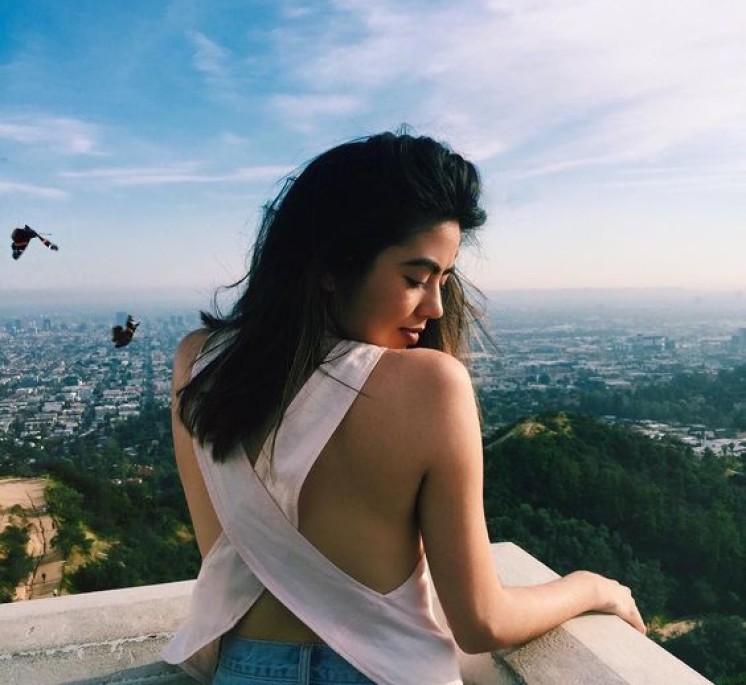
Los Angles is the most unforgettable first act of this. When looking at the global cinema landscape, the world can only see the reputation of Hollywood, but it is in the city cinematic history is most telling when the iconic images come to life. Griffith Observatory is a stop that is imperative. The observatory is from La La Land and gives one of the clearest views of the Hollywood Sign and the skyline of Los Angles. The dome theatre, astronomy exhibits, and public telescopes are all free. The observatory is reached by the weekend DASH Observatory shuttle. The city lights are more memorable than any dance scene. Come prepared for the evening shift.
Griffith Observatory has been featured in films like GoldenEye, Charlie’s Angels: Full Throttle, Transformers, and Gangster Squad. However, La La Land’s Los Angeles goes way beyond the observatory. Take a ride on the Angels Flight funicular, over a hundred years old, in the downtown area, and then make your way to the Hermosa Beach to enjoy a sunset over the Pacific. The Lighthouse Cafe, located nearby, was featured in the farewell scenes of the movie. This is the great part about location tours: being able to experience what the city feels like, rather than just replicating a frame from a movie.
If you want to experience a darker side of Los Angeles, take a drive down Mulholland Drive. David Lynch’s Mulholland Drive has made this road synonymous with mystery and Hollywood angst. This road runs through the Santa Monica Mountains and provides beautiful overlook views of Malibu, winding curves, and views of the wealthy neighborhoods below. It's a great road, but be aware that it can get quite narrow, and there are a lot of sharp turns, so just take your time and enjoy the drive;

don't treat it like a sightseeing road. You can also visit Runyon Canyon, Paramount Pictures, and Sunset Boulevard for the extra Lynch-inspired experience. The Getty Center and Universal Studios Hollywood are also easily accessible by car.
The cinematic feel of Boston is uniquely American. It's one of the oldest cities in the country, and with its collection of over 100 colleges and universities, the city creates a unique blend of scholarship, work, civic engagement, and social community. It's this spirit of Boston that gives Good Will Hunting much of its warmth. The film starts at the Massachusetts Institute of Technology, which has a completely different feel than the neighboring Harvard University. Those not interested in university rankings should also make a stop at MIT for The Great Dome and other modern impressive buildings. The Red Line's Kendall/MIT station is the best stop for MIT.
Boston Public Garden is also a major filming location for Good Will Hunting, and it's where Will and Sean's friendship blossoms. It also features in Ted, where there are some film scenes at the duckling statues and park benches. The garden's value as a filming location is amplified because it is not a movie set, but a real civic area in the heart of Boston. Take your time and enjoy the space rather than rushed walks.
North End Buttery located on Shawmut Avenue in the South End, has been featured in the film Spotlight. The cafe serves as a filming location for a scene involving Sacha Pfeiffer, a reporter. South End Buttery is a cafe by day and serves as a bar and restaurant in the evenings. They also have a market for prepared meals to go. The original listing has separate hours for each entity, but patrons are encouraged to contact the business directly to confirm hours before visiting. After stopping at the South End Buttery, visitors may continue the journalistic path of the film to the Boston Globe, Fenway Park, and Boston Public Library. In addition to these sites, the Museum of Fine Arts and the Freedom Trail should also be included in a more complete itinerary for the city. Boston's charm is more than a few well known movie locations. The city has a curious combination of history, museums, and ordinary streets, in a way that doesn't require them to be more than what they are.
The film shoots Atlanta's Piedmont Park as New York City, where the Avengers Infinity War film opens. This is particularly interesting as Atlanta is not a city of large importance, while now being one of the major hubs for filming especially for large budget superhero movies. This belies the first thought of Atlanta being known for the Olympics and Coca Cola. Piedmont Park is an actual park with 200 acres of open space that provides a variety of recreational opportunities. The park operates with open hours like most but a visit should be planned around these hours.
Piedmont Park is only the start of Atlanta’s geography for the screen industries. Pinewood Atlanta Studios has made many films for the Marvel franchise, and the Fairlie-Poplar Historic District serves as a substitute for other cities in films like Ant-Man and Spider-Man. Though the World of Coca-Cola and the CNN studio tour do not have superhero ties, they are a great introduction to Atlanta's culture.
Fans of The Hunger Games should head to the Atlanta History Center in Buckhead first. Swan House, an elegant early twentieth-century residence designed by Philip Trammell Shutze, was used as President Snow’s mansion. The house exudes the look and feel of a wealthy Southern home from the 1920s and 1930s. The rest of the history center is equally deserving. The Smith Family Farm and the Atlanta History Museum offer a look at the region’s story as it relates to slavery and civil war, the south’s development, and the Atlanta Olympics. The Road Atlanta and the Atlanta Marriott Marquis were also featured in the Hunger Games films. The original admission info indicated adult tickets were 21.50 dollars, student tickets cost 18 dollars, and children under three were free. Check for current prices and hours before visiting.
Seattle wraps up the journey in a softer way. It is rare for a city in the U.S to be so influenced by the imaginations of the romantic films. The homes that float on Lake Union became part of the world’s imagination after Float On was released and created a houseboat home that belongs to Tom Hanks’s character. Lake Union Park is a perfect spot to take a walk, have a quick bite, or enjoy lunch next to the water. The houseboats on the western side of the lake are private homes, and travelers may only look at them from the public land or restaurants. Private home houseboats are plenty so travelers must look at them from the public land and from strategic restaurants.
Additional film locations related to Sleepless in Seattle include The Arctic Club, which connects to the New Year’s party, and Alki Beach Park, which connects to the family play scenes. Lake Union is also well positioned to the South of Seattle Center and the Space Needle, and to the North of Fremont, the University District, and the nearby University of Washington. The lake itself is the center of Seattle and its changing weather, boats, and open water explain why the romance in Seattle is at all times more grounded than glossy.
Twilight depicts a markedly less civilized environment. The Olympic National Park, located on the Olympic Peninsula of Washington, provides the atmospheric naturistic world surrounding its vampire-and-human love story. The park is one of the most diverse, with a long stretch of coastline, snow-covered mountains, geothermal hot springs, and a temperate rain forest. Its forests covered with moss, coniferous trees, streams, and waterfalls give the fantasy film industry a lot to work with;

they look like the Wilderness. Roads do not penetrate the wilderness for the protective nature of the park, so planning is important. Those driving from Seattle may stop in Olympia, where the Washington State Capitol, and the Nisqually National Wildlife Refuge.
In distance, practical planning should support the journey rather than control it. There are different rules for access, opening times, and seasonal conditions for the Griffith Observatory, MIT, Piedmont Park, Atlanta History Center, Lake Union Park, and Olympic National Park. Look for official visitor information shortly before you go, especially for public transportation, telescope viewing, museum tickets, road conditions, and services available at the national parks. If you are driving, Los Angeles mountain roads and the distance from Seattle to Olympic National Park will take longer than anticipated.
Air travel options to Los Angeles, Atlanta, Boston, and Seattle from China have historically included direct and connecting options, including Delta Air Lines. The original itinerary stated that there are multiple cabin categories and onboard amenities, however, offerings, aircraft type, and schedule, entertainment options, Wi-Fi, and meals may differ. Consider these factors when booking and verify them with the airline before buying tickets.
The trip's lasting value is not the prospect of becoming a screen hero. Rather, it is an opportunity to witness how movies obtain their magic from authentic locations: a hillside overlooking Los Angeles, a bench in Boston, a park in Atlanta, a lake in Seattle, and a rain-drenched forest in Washington. The cities, and not the films that brought the audience there, will be more alive than anything else.