Los Angeles is too large to be listed on a checklist, yet a well organized day can show what makes LA so great; this is a city that blends cinematic history, majestic vintage buildings, street style, great food, and stunning views from the hills. The key is to think about its famous photo stops as more than just backdrops. Start in the downtown area, then move all the way to Hollywood, and finish above the city as the lights come on.
Your first stop for breakfast is close to your hotel, then go to Angels Flight Railway. This small funicular has been operating since 1901 and goes up a steep 99-meter slope from Hill Street to Olive Street. It has a practical purpose for helping residents go up and down the hills instead of climbing more than 200 steps. These short wooden car rides feel like a little piece of old LA that is preserved in motion. The railway has appeared in over 100 films, and even more people recognized it after the romantic movie La La Land.
A short walk takes you to a slower pace at The Last Bookstore. This is not Los Angeles' last bookstore as the name is meant to be an ironic and playful response to the fears of the decline of physical books. Beginning as Josh Spencer's small loft business in 2005, it has now transformed into one of Los Angeles' major book stores that sells new and used books as well as vinyl records. The atmospheric and vintage-inspired interior with its endless book shelves draw in photographers and customers to help them slow down in the fast pace environment of Los Angeles. A bookstore with room to wander is a luxury in the city.
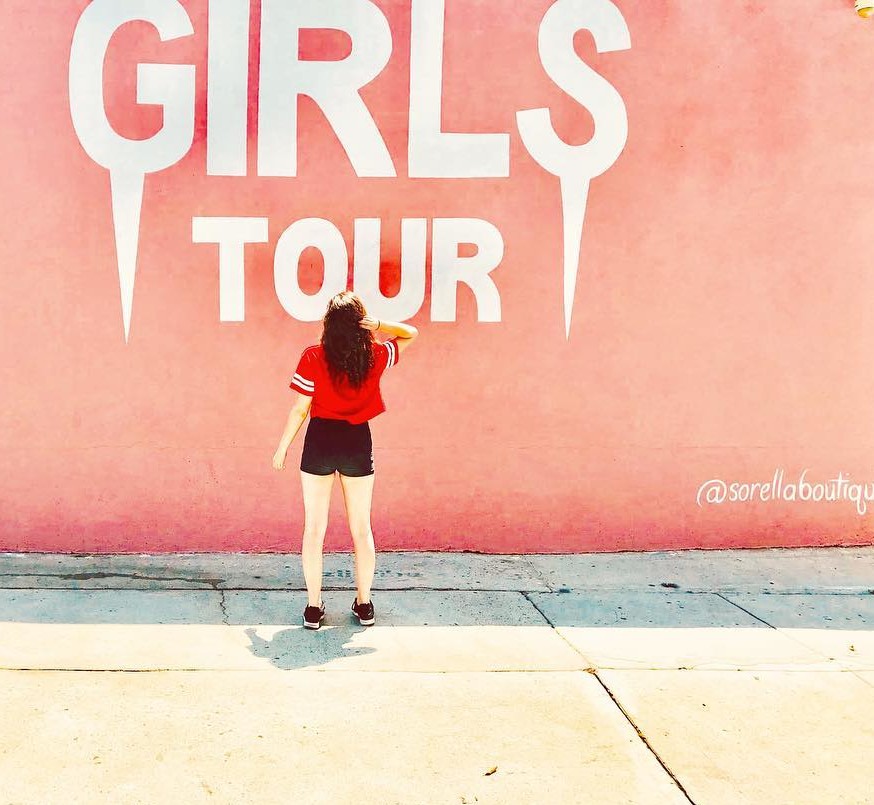
For an even more contemporary feel of Los Angeles, head over to Melrose Avenue. This street defines Los Angeles with fashion, boutique shops, vintage finds, art galleries, and restaurants. One of the most photographed spots is the pink Paul Smith wall. The walls, which are covered with murals including wing motifs, and graffiti style art, add to the open air art and style culture of the street. It is meant to be busy and that is part of the experience of Los Angeles showing off its trendy side.
While you’re in the area, consider stopping by the Bradbury Building, one of the city’s most iconic pieces of architecture. Designed by George H. Wyman in 1893, the building truly stands the test of time. With natural light illuminating the central atrium, the marble floors, painted glass, narrow elevators, and ornate iron staircases, the building interior is a work of art. The rooftop casting is a stunning glass masterpiece. Film lovers may recognize the building's Victorian/Italian Renaissance design from the movie Blade Runner. While most of the building is privately occupied, the public has access to the lobby which is also a testament to why the building is a Los Angeles historic landmark.
For lunch, we recommend the Grand Central Market on South Broadway. Opened in 1917, the grand central market is one of the oldest running markets in Los Angeles. The center has lots of food kiosks which offer a range of food options and showcases the diversity of food in Los Angeles. Among the other cuisines available, you will find the famous Eggslut food stall, DTLA Cheese, Belcampo, and G&B Coffee. The Market has also been featured in the movie La La Land. It has been a gathering spot for generations of Angelenos and has become a tourist attraction.
In the afternoon go to the Hollywood Walk of Fame. While busy, commercial, and chaotic, dismissing it misses it cultural value. The walkway stretches over 15 blocks of Hollywood Boulevard and 3 blocks of Vine Street, and has more than 2,500 brass and terrazzo stars. These stars honor contributors to the entertainment industry. The first one, for Joanne Woodward, was installed in 1960. The stars also have symbols that indicate achievement in film, television, recording, radio, or live theatre. The Walk of Fame could be seen as over the top, but Hollywood has always loved spectacle, and this monument shows that perfectly.
The former OUE Skyspace Los Angeles also had views of downtown and was known for its observation areas, wing-shaped photo spots, and a glass slide. It was located at 633 West 5th Street in the Federal Bank Building. As access and operations change, if this is something someone wishes to do, check availability before planning around it.
Griffith Observatory is a great place to catch the view in late afternoon and evening. It’s located in Griffith Park looks out at the Hollywood hills and has excellent views of Los Angeles. You’ll get good views of the city and beyond thanks to the observatory’s extending domes, astronomy exhibits, rotating globe, planetary displays, solar telescope, and Carl Zeiss refracting telescope. The observatory got new film fame in La La Land, but the best time to visit is after the sun goes down when the city is lit up down below and the observatory has views of the quiet, beautiful sky and sunset.
This trip is possible in a day, but you’ll need to be strict with time and have a good estimate on how long it will take to get to each stop. Getting around Los Angeles is difficult because walking is not an option. Public transport often does not stop close to each destination and driving offers more freedom because you can go to each stop in the order you choose, but driving is also the most difficult due to parking, unfamiliar traffic, and road conditions. For time pressed travelers that want to avoid the stress of managing the logistics, a properly licensed and insured tour operator may be a good option in lieu of driving.
Los Angeles appreciates its tourists for looking beyond the stereotypical social media shot. Its attractions are well known because they tell real stories. Whether it is a century-old train track, an unlikely book store, a multi-ethnic market, purpose built-for-their-movies buildings or an observatory that overlooks the cities night glow. The combination of these places offers tourists an enticing glimpse into the City of Angels, even if they only have 24 hours.